
Leave Your Message
The global market for aesthetic lasers has undergone a profound transformation over the last decade. As we analyze the trajectory of the Laser Hair Removal Machine For Dermatology Clinics, it becomes evident that the industry is shifting away from rudimentary salon-grade devices towards highly sophisticated, medical-grade platforms. Valued at several billion dollars globally, the medical aesthetic device market is driven by increasing patient demand for non-invasive, highly effective, and safe procedures. Dermatology clinics are at the epicenter of this surge, acting as the trusted authority for both cosmetic enhancements and medical dermatological treatments.
From an industrial perspective, the manufacturing of these devices has reached new heights of precision. Modern dermatology clinics require machines that are not only FDA-cleared and MDR CE certified but also capable of delivering consistent energy outputs without degrading over time. The integration of robust internal components—such as micro-channel cooling systems, high-power coherent laser bars, and advanced power supplies—ensures that these machines can withstand the rigorous daily operational demands of a busy clinical practice.
Commercially, the Return on Investment (ROI) for a premium Laser Hair Removal Machine For Dermatology Clinics is exceptionally compelling. Unlike consumable-heavy treatments, laser hair removal offers a high-margin revenue stream. Clinics that invest in cutting-edge technology, such as multi-wavelength diode lasers, can treat a broader demographic, including skin types that were previously deemed too risky for laser interventions. Furthermore, the rise of OEM (Original Equipment Manufacturer) and ODM (Original Design Manufacturer) partnerships allows large dermatology chains to custom-brand their equipment, thereby elevating their brand equity, standardizing their treatment protocols across multiple locations, and significantly reducing middleman procurement costs.
While often perceived purely as a cosmetic procedure, the application of a Laser Hair Removal Machine For Dermatology Clinics extends deeply into medical therapeutics. Dermatologists frequently deploy these advanced systems to manage and cure debilitating skin conditions that severely impact patients' quality of life. Understanding these deep application scenarios highlights the indispensable nature of clinical-grade lasers.
Highly prevalent in patients with tightly curled hair and darker skin tones (Fitzpatrick IV-VI), this inflammatory condition is effectively treated using Nd:YAG (1064nm) or advanced Diode (810nm) lasers. The laser bypasses the epidermal melanin to target the deep follicle, preventing the hair from curving back into the skin and eliminating the chronic inflammation and scarring associated with the disease.
Polycystic Ovary Syndrome often leads to severe, hormone-driven hair growth in women. Dermatologists utilize high-powered laser hair removal machines in conjunction with systemic medical therapies to provide long-term management. The precision of clinical lasers ensures that thick, terminal hairs on the face, neck, and chest are safely targeted without damaging the surrounding sensitive facial tissue.
In the management of Hidradenitis Suppurativa (HS) and Pilonidal sinus disease, hair follicles act as the primary site of occlusion and subsequent painful cyst formation. By utilizing a medical-grade laser hair removal machine, dermatologists can permanently destroy the follicles in the axillary, inguinal, and gluteal cleft regions, significantly reducing disease flare-ups and the need for invasive surgical interventions.
Furthermore, treating the entire spectrum of human skin colors requires unparalleled technological sophistication. A professional Laser Hair Removal Machine For Dermatology Clinics must possess adjustable pulse durations and fluences. Long-pulsed settings allow for the safe thermal relaxation of the epidermis in darker skin types, ensuring that the targeted chromophore (melanin in the hair bulb) absorbs the energy while the epidermal melanin remains unharmed. This level of precision is what separates clinical devices from commercial spa equipment.
The technological evolution of the Laser Hair Removal Machine For Dermatology Clinics is advancing at an unprecedented pace, heavily influenced by artificial intelligence and precision engineering. As we look toward the future, several key trends are redefining what these machines can achieve in a clinical setting.
The integration of Artificial Intelligence (AI) is arguably the most significant leap forward. Modern systems are being equipped with intelligent sensors that automatically read the patient's melanin index and hair density. The AI algorithm then calculates and recommends the optimal pulse width, fluence, and wavelength. This not only drastically reduces the learning curve for clinical practitioners but also minimizes the risk of human error, ensuring a burn-free, highly efficacious treatment every single time.
Historically, clinics had to purchase separate machines for different skin types (e.g., an Alexandrite 755nm for light skin, a Diode 810nm for medium skin, and an Nd:YAG 1064nm for dark skin). The current trend is the consolidation of these technologies into a single handpiece. By emitting all three wavelengths simultaneously, the laser targets different tissue depths and anatomical structures within the hair follicle—the bulge, bulb, and papilla—resulting in a much more comprehensive and efficient clearance rate across all Fitzpatrick skin types.
Patient comfort and epidermal protection are paramount in dermatology. The latest trend involves advanced Sapphire contact cooling combined with TEC (Thermoelectric Cooling) systems that can maintain the handpiece tip at a constant -5°C to 5°C, even during continuous high-energy emission. This continuous cooling pre-chills the skin before the laser pulse, protects it during the pulse, and soothes it post-pulse, making the procedure virtually painless.
Internet of Things (IoT) technology is transforming machine maintenance. Clinical lasers now feature Wi-Fi connectivity, allowing for real-time monitoring of system health, water flow, temperature, and shot counts. Manufacturers can perform remote diagnostics, push software updates, and proactively dispatch replacement parts before a breakdown occurs, ensuring zero downtime for the dermatology clinic.
In the competitive global market of medical aesthetic technologies, finding a reliable ODM/OEM partner can make the critical difference between product success and market stagnation. Beijing UNT Technology Co., Ltd. stands at the forefront of this industry, offering comprehensive medical aesthetic equipment manufacturing solutions that combine cutting-edge innovation with ISO-certified production excellence.
UNT was registered and established at Beijing and HK, China.
UNT developed IPL therapy device independently and successfully.
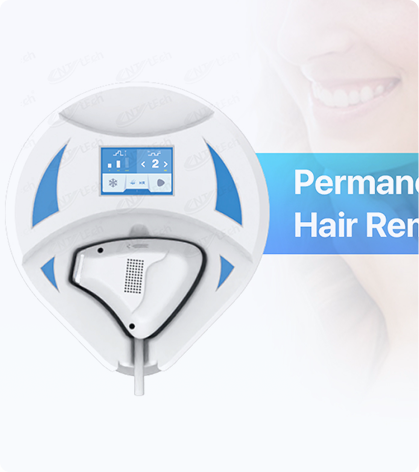
Developed diode laser hair removal device operation handle with touch screen control. Named: "Alpha".
UNT developed a series of medical & beauty laser equipment.
"SmartDepi" Global first Android Operation System Used in Diode laser.
Expanding the office space to 6000 square meters, 130 employees.
4 machines get FDA 510K NO. including diode lasers, museshape, ND YAG, and Freezing Slimming.
ISO13485 (Base on MDR) MDSAP (ISO:13485). Diode Laser get MDR CE. Euro service center built named as "APEX".
As a certified high-tech enterprise specializing in R&D-driven medical aesthetic solutions, we deliver unparalleled manufacturing capabilities for your Laser Hair Removal Machine For Dermatology Clinics. Why Choose UNT Technology for Your Medical Device ODM/OEM Needs?



Dedicated quality assurance team to ensure compliance with global medical standards.
30% faster time-to-market through optimized DFM processes and scalable production.


