
Leave Your Message
Explore our top-tier medical-grade solutions designed specifically for hospital dermatology and aesthetic centers.
In the rapidly evolving landscape of medical aesthetics, the Alexandrite Laser Hair Removal Machine for Hospitals has unequivocally established itself as the clinical gold standard. Operating at a highly specific wavelength of 755nm, the Alexandrite laser offers an unparalleled absorption rate by melanin, making it exceptionally effective for long-term hair reduction, particularly in patients with Fitzpatrick skin types I through III. Unlike conventional salon-grade devices, hospital-grade Alexandrite systems are engineered to deliver precise, high-energy pulses that target the hair follicle's bulge and bulb without causing thermal damage to the surrounding epidermis.
For hospital dermatology departments, the adoption of an Alexandrite laser represents a commitment to evidence-based medicine. The 755nm wavelength penetrates deep enough to reach the dermal papilla while maintaining a safety profile that is rigorously demanded in clinical environments. Furthermore, modern Alexandrite Laser Hair Removal Machines designed for hospitals incorporate advanced cooling mechanisms—such as Dynamic Cooling Devices (DCD) that deploy cryogen spray milliseconds before the laser pulse, or advanced contact cooling sapphire tips. These medical-grade cooling systems are critical in a hospital setting, ensuring patient comfort, minimizing the risk of post-inflammatory hyperpigmentation (PIH), and allowing practitioners to safely use higher fluences for superior clinical outcomes.
The transition from standalone aesthetic clinics to comprehensive hospital-based dermatological centers has necessitated equipment that can withstand continuous, high-volume usage. An Alexandrite Laser Hair Removal Machine for Hospitals is built with robust internal components, including high-capacity water cooling systems and durable flashlamps, ensuring uninterrupted operation during back-to-back clinical sessions. This reliability is paramount for hospital administrators who require predictable equipment uptime to maintain patient scheduling and departmental efficiency.
The global market for medical aesthetic devices is experiencing exponential growth, with the hospital segment capturing a significantly expanding share. The commercial viability of the Alexandrite Laser Hair Removal Machine in hospital settings is driven by a paradigm shift in patient behavior. Today's patients increasingly prefer to undergo aesthetic procedures within the safety and regulatory oversight of a hospital environment, rather than in unregulated med-spas. This shift has prompted hospitals to integrate aesthetic dermatology into their service portfolios, transforming it from a niche offering to a highly lucrative revenue stream.
From an industrial perspective, the manufacturing of hospital-grade Alexandrite lasers is a highly regulated, capital-intensive process. Manufacturers must strictly adhere to international quality management systems, such as ISO 13485, and obtain stringent regulatory clearances including FDA 510(k) in the United States and MDR CE marks in Europe. The industrial supply chain for these machines involves precision optical engineering, advanced thermodynamics, and sophisticated software development. Consequently, hospitals are highly selective, partnering only with established original equipment manufacturers (OEMs) and original design manufacturers (ODMs) who can guarantee supply chain transparency and post-market clinical support.
Economically, while the initial capital expenditure for a hospital-grade Alexandrite laser system is substantial, the Return on Investment (ROI) is exceptionally rapid. Hospitals benefit from the machine's high throughput capabilities. With large spot sizes (often up to 24mm) and rapid repetition rates (up to 10Hz), a full back or leg treatment can be completed in a fraction of the time required by older technologies. This efficiency maximizes the number of patients treated per hour, optimizing clinical workflows and significantly boosting departmental profitability while delivering superior clinical efficacy.
The future trajectory of the Alexandrite Laser Hair Removal Machine for Hospitals is inextricably linked to Artificial Intelligence (AI) and the Internet of Medical Things (IoMT). As hospitals move towards smart healthcare ecosystems, laser devices are evolving from standalone tools into intelligent, data-driven clinical platforms.
1. AI-Driven Parameter Optimization: One of the most significant trends is the integration of AI algorithms that assist dermatologists in real-time. By utilizing built-in melanin readers and optical sensors, the machine can automatically assess the patient's Fitzpatrick skin type, hair density, and hair thickness. The AI then recommends the optimal fluence, pulse duration, and cooling parameters. In a hospital setting, this reduces operator dependency, minimizes the risk of human error (such as thermal burns), and ensures standardized, reproducible clinical outcomes across different practitioners.
2. Hybrid Laser Technologies: Industrial development is heavily leaning towards hybrid systems that combine the 755nm Alexandrite wavelength with the 1064nm Nd:YAG wavelength in a single platform. This dual-wavelength approach allows hospitals to treat the entire spectrum of skin types safely. While the Alexandrite is the gold standard for lighter skin, the Nd:YAG is critical for darker skin tones (Fitzpatrick IV-VI). A combined system maximizes the hospital's patient demographic reach, ensuring no patient is turned away due to technological limitations.
3. Predictive Maintenance via IoMT: For hospital clinical engineering departments, equipment downtime is a critical issue. Modern Alexandrite lasers are now equipped with IoT sensors that continuously monitor the health of internal components, such as water flow rates, flashlamp degradation, and power supply stability. This data is transmitted securely to the cloud, allowing the manufacturer to perform predictive maintenance. Hospitals are alerted to replace parts before a catastrophic failure occurs, ensuring seamless patient care and extending the lifespan of the capital equipment.
While commonly associated with cosmetic hair removal, the application of the Alexandrite Laser Hair Removal Machine within a hospital encompasses a wide array of deep clinical scenarios, addressing both pathological conditions and pre-surgical requirements.
In hospital settings, dermatologists frequently collaborate with endocrinologists to treat patients suffering from hirsutism—excessive, male-pattern hair growth in women, often caused by Polycystic Ovary Syndrome (PCOS) or congenital adrenal hyperplasia. For these patients, hair removal is not merely cosmetic; it is a vital psychological and medical intervention. The Alexandrite laser provides rapid, highly effective reduction of terminal hairs, significantly improving the patient's quality of life when used in conjunction with hormonal therapies.
Pseudofolliculitis barbae, commonly known as razor bumps, is a chronic inflammatory condition prevalent in individuals with tightly coiled hair. In severe cases, it leads to painful pustules, scarring, and keloid formation, necessitating medical intervention. Hospitals utilize the Alexandrite laser (for appropriate skin types) to destroy the hair follicle entirely, thereby eliminating the root cause of the inflammation. This medical application is often covered by health insurance when deemed medically necessary, highlighting the clinical importance of the device.
Surgical Site Infections (SSIs) are a major concern in hospital operating rooms. Traditional pre-operative hair removal methods, such as shaving, create micro-abrasions on the skin that serve as entry points for pathogens. Hospitals are increasingly utilizing laser hair removal for patients scheduled for elective surgeries, particularly in neurosurgery, plastic and reconstructive surgery, and skin grafting procedures. The Alexandrite laser provides a clean, trauma-free, hairless surgical field, significantly reducing the risk of post-operative infections and promoting better wound healing.
Beyond hair removal, the 755nm wavelength of the Alexandrite laser is highly absorbed by melanin, making it an excellent tool in the hospital dermatology department for treating benign pigmented lesions. Dermatologists utilize these machines to treat solar lentigines, freckles, and even certain congenital melanocytic nevi. The versatility of the machine allows hospitals to maximize its utility across different dermatological sub-specialties.
In the competitive global market of medical aesthetic technologies, finding a reliable ODM/OEM partner can make the critical difference between product success and market stagnation. Beijing UNT Technology Co., Ltd. stands at the forefront of this industry, offering comprehensive medical aesthetic equipment manufacturing solutions that combine cutting-edge innovation with ISO-certified production excellence.
As a certified high-tech enterprise specializing in R&D-driven medical aesthetic solutions, we deliver tailored solutions for laser systems, RF devices, ultrasound equipment, and emerging technologies. Our state-of-the-art 6,000 square meter manufacturing facility includes a 100 square meter clean room, ensuring vertically integrated production covering in-house board development, optical engineering, and precision machining. We offer scalability from prototypes to volume production exceeding 50,000 units annually.

UNT was registered and established at Beijing and HK, China, laying the foundation for clinical excellence.
UNT developed the clinical IPL therapy device independently and successfully for medical applications.
Developed diode laser hair removal device operation handle with touch screen control. Named: "Alpha".
UNT developed a comprehensive series of medical & beauty laser equipment for hospital integration.
"SmartDepi" Global first Android Operation System Used in Diode laser, introducing smart clinical ecosystems.
Expanding the office and manufacturing space to 6000 square meters, supporting 130 dedicated employees.
4 machines get FDA 510K NO. including diode lasers, museshape, ND YAG, and Freezing Slimming.
Achieved ISO13485 (Base on MDR) and MDSAP (ISO:13485) standards. Diode Laser get MDR CE. Euro service center built named as "APEX".

Full-cycle development from concept to commercialization. Modular design flexibility for regional compliance (FDA/CE/MDR certifications).

Dedicated quality assurance team to ensure compliance with ISO 13485, IEC 60601-1, and FDA approvals. Complete documentation for global markets.
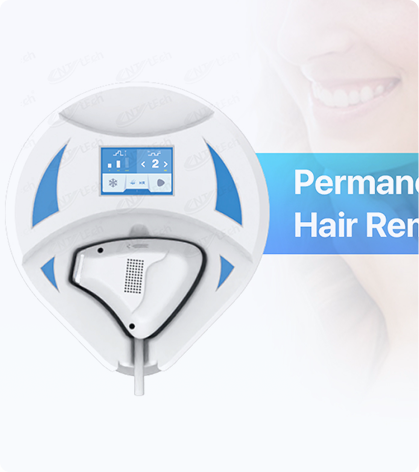
30% faster time-to-market through optimized DFM processes. OEM/ODM personalization including appearance, color, software, and LOGO customization.
Discover our full range of advanced medical aesthetic devices, engineered for hospital excellence.


